
Helly

Helly

USA

Flag

The Sports Analyst

University of Michigan


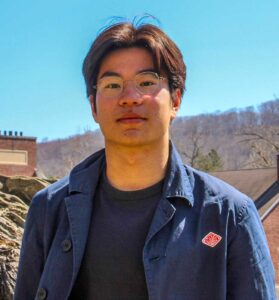
Helly has always loved sports. A dedicated tennis player, he developed leadership skills as a two-year Varsity Captain and member of his school’s Student Athletic Leadership Council. At the same time, he possessed a natural talent for numbers, channeling his love of statistics into math league, quiz bowl, and trivia competitions.

By junior year, Helly already had a clear vision for his future. He wanted to combine his passion for sports with his analytical mindset and pursue a career in sports analytics.
To help him explore that interest, we encouraged Helly to apply to the selective Moneyball Academy through UPenn’s Wharton Global Youth Program. The experience confirmed he had found his path.

As we built his college list, we encouraged the Michigan native to take a closer look at the University of Michigan. A campus visit changed everything. Helly discovered that combining Movement Science and Statistics could provide a strong foundation for sports analytics while offering opportunities to gain hands-on experience with a premier athletic department.

As application season approached, we discussed strategy. Like many selective public universities, Michigan fills a significant portion of its class through Early Action. We encouraged Helly to take advantage of the non-binding option, allowing him to demonstrate strong interest while keeping his Regular Decision options open.

Together, we crafted essays connecting his leadership, academic interests, and passion for sports analytics. The strategy worked. Helly earned Early Action acceptances and ultimately chose Michigan, where he will begin his journey as a Wolverine this fall.

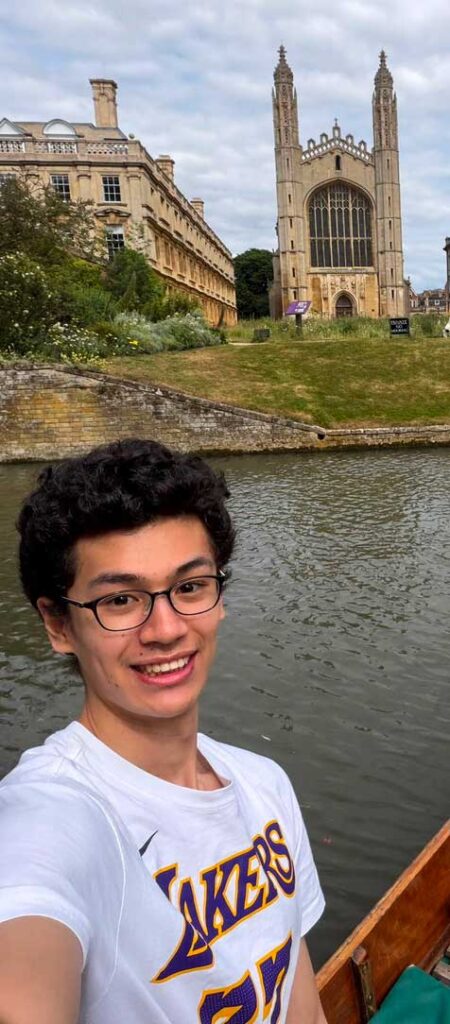
Ethan ’26

Ethan

New Zealand

Flag

The Mindful Leader

Cambridge

REA — Restrictive Early

Action (Non-binding)

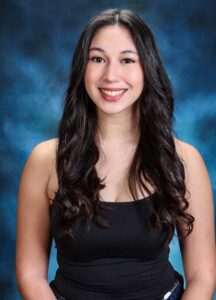
At age twelve, Ethan’s doctors discovered a serious medical condition that forced him to give up many of the activities he loved. Suddenly, a carefree childhood became clouded by uncertainty and worry.

Searching for answers, Ethan and his father traveled to Bhutan, where a Buddhist monk introduced him to mindfulness meditation. Three simple words—“Stop. Breathe. Refocus.”—would ultimately transform the way he approached life.

When we began working with Ethan, he was already emerging as a thoughtful leader at his boarding school in England. He excelled in debate, mentorship, and community service, but what stood out most was his desire to help others through mindfulness.

Ethan developed a mindfulness program for local primary school students. The initiative eventually reached Westminster, where he was invited to address Members of Parliament about expanding mindfulness education throughout the United Kingdom.

By senior year, Ethan had been elected Head of School, becoming the first student in the school’s history from a South Asian or New Zealand background to hold the position.
Like many international students, Ethan wanted to keep his university options open. We helped him explore opportunities in both the United States and UK. Restrictive Early Action proved ideal, allowing him to apply early in the U.S. while preserving his UK options.

Together, we refined his personal essay and prepared for interviews. The results were extraordinary: a conditional offer from Cambridge, along with offers from Ivy League and elite liberal arts colleges.

In the end, Ethan chose Cambridge. His story reminds us that the best decisions often begin the same way his journey did: Stop. Breathe. Refocus.

Harry

Harry

UK

Flag

The Architect

Swarthmore

ED2 — Early Decision II

– (Binding)

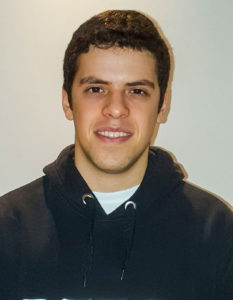
From a young age, Harry was fascinated by model trains and increasingly captivated by the buildings, landscapes, and communities surrounding them.

Recognizing his growing interest in architecture, we helped Harry explore ways to pursue it more seriously. When it became clear his local school offered few opportunities in architecture and design, we worked with Harry and his family on transferring to a boarding school better suited to his interests. The decision proved transformative. Harry flourished academically and personally, eventually serving as Dorm Prefect and Asian Affinity Leader.

As the college process began, we helped Harry explore universities offering different approaches to architecture and encouraged internships that allowed him to experience the profession firsthand. Initially, he applied early to a highly selective university with a structured architecture curriculum. But after being deferred, he began questioning whether the narrowly focused path truly matched his interdisciplinary interests.

Harry kept returning to a visit at Swarthmore College, where he immediately felt at home. Together, we developed essays, resumes, portfolios, and interviews highlighting connections between architecture, literature, environmental studies, art, and community.

Confident in his direction, Harry applied through Early Decision II, a January binding option that gives students additional time to refine their plans.
Six weeks later, Swarthmore notified him of his acceptance.

In an interesting twist, the university that initially deferred Harry is part of a consortium with Swarthmore, allowing students to take classes across campuses and even pursue a joint degree. Harry discovered he did not have to choose between architecture and intellectual exploration. Sometimes the perfect fit can offer both.

Ava

Ava

Philippines

Flag

The Community Builder

Dartmouth

(ED1) – Traditional

Early Decision (Binding)

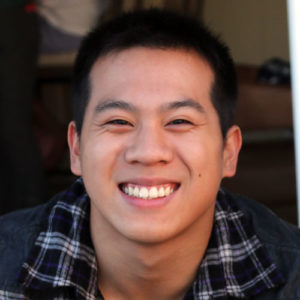
We first met Ava through her older brother, a charismatic music lover who went on to perform in his college marching band. Ava, however, was determined to carve out her own identity and path.

By the end of sophomore year, Ava was a strong student, varsity tennis player, and active leader in her school community. To build confidence before enrolling in her school’s IB program, she joined a 28-day National Outdoor Leadership School expedition in the Pacific Northwest. As a student raised in Manila, she initially felt overwhelmed and out of place among younger but more experienced campers. But, as fellow campers began seeking her advice on academics, leadership, and high school life, Ava discovered that her greatest strength was not surviving alone but building community.

When she returned home to Manila, her confidence and leadership grew. By senior year, she was organizing major school events, leading service initiatives, performing bass guitar with her student rock band, and rallying classmates during Battle of the Bearcats.

As we explored colleges together, Ava was most energized by the idea of joining an intellectually vibrant, collaborative campus. We recommended Dartmouth for its close-knit culture, distinctive D-Plan, and emphasis on relationships, reflected in its unique peer recommendation requirement.

She loved what she discovered, so we encouraged her to apply through Dartmouth’s binding Early Decision program and helped shape an application that highlighted her ability to build connection wherever she went.

On decision night, Ava opened her admissions portal. Moments later, confetti filled the screen: Dartmouth had welcomed her into its community.

Anna

Anna

USA

Flag

The Cheerleader

Wake Forest

ED0 — Rolling Early Decision

Having worked with Anna’s older brother through his successful college search, we quickly recognized something familiar in Anna: she also had a strong instinct for what she wanted in a college experience.

During a college tour through the Mid-Atlantic and South in February of her junior year, Anna realized she wanted a school that combined strong academics with a spirited campus culture. As a lifelong cheerleader, she was drawn to communities where students were engaged both inside and outside the classroom.
To help evaluate each campus, we prepared Anna before visits. She spent time with current students and experienced the culture beyond the admissions presentation. Additional visits and conversations confirmed what she already suspected: Wake Forest was the right fit.

That opened the door to Wake Forest’s innovative ED0 program, which allows students to apply in early fall and receive a binding admission decision before tr aditional Early Decision deadlines.

The accelerated timeline required unusual focus. Recommendations, testing, essays, and application materials all had to be completed months earlier than most seniors. Over the summer, we worked closely with Anna on her application strategy and essays.

Anna submitted her application at the end of September and received her acceptance at the end of October—before many students had even submitted their Early Decision applications.

By spring, she had also earned a coveted spot as a sideline cheerleader and will soon cheer on the Demon Deacons in the ACC. Her story demonstrates how an early commitment to the right fit can create extraordinary opportunities.

Philip ’21

Philip ’21

Greece

Flag

The Core Curriculum

Columbia University

Philip '21Philip approached The Short List as a sophomore wanting to discuss whether he should continue following the Greek national curriculum or move to an International Baccalaureate (IB) curriculum for his final two years of high school. That was not the last time we would discuss curriculums with him.
The Greek refugee crisis dominated Philip’s high school years. He co-founded Make A Difference with some high school friends and organized a basketball fundraiser featuring a game between his basketball team and a refugee team. He liked being a leader and expressed an interest in touring USA colleges with strong business programs. We got him involved in test prep, believing top scores would open opportunities, and we helped map out a college tour that included a stop in New York City to visit Columbia.

On his return to Athens, Philip wanted to make a more lasting impact in the refugee crisis, so he joined The Home Project, an organization hiring math tutors to work with young refugees. The Short List also helped Philip explore organizing a summer math camp for refugees, but COVID prevented his plan from moving forward.

We began brainstorming alternative summer initiatives, including a webinar series, applying for a prestigious online research program, and securing an internship with a national bank. His thinking began to shift that summer as he explored COVID’s economic impact on the European Union while working on the research project.

That fall, Philip said he no longer wanted to focus on a narrow pre-professional business curriculum. He began seeing himself as a social scientist and decided to apply Early Decision to Columbia for their renowned economics program and Core curriculum.

We brainstormed responses to Columbia’s supplemental questions and encouraged him to share how writing his research paper and his direct experience with the refugee crisis had shaped his concern for humanity. Philip was thrilled when Columbia made him an offer in a year their acceptance rate dropped below 4% for the first time in the school’s history.

Jack

Jack

New York

The Gap Year

University of Chicago

Jack
Jack was born in Australia, and his parents make their home in Hong Kong. He was home-schooled for several years and often joined his parents on their global travels. In a world of adults, Jack found his personal escape in books. Those books motivated him to become a storyteller.

Jack’s family enrolled him in a boarding school in England at the age of eight, where he learned to adjust from a world of all adults to one of only kids his age. Jack still loved stories, and by the time he got to high school, he was telling them through photography. His classmates began asking him to photograph their events. They often joked that, while Jack followed their moves on the football pitch, they followed his movements up and down the sidelines capturing them in action. After the games, Jack’s room would come alive with students eager to relive the game through his photos.

We met Jack in the spring of his junior year and began helping him plan a gap year. In late summer, Jack suddenly announced he wanted to apply to university now, instead of during his gap year. Jack hadn’t visited a school, taken a standardized test, or done any preparation to apply. We knew he—and we—needed to move quickly.
We helped Jack register for the SAT and lined him up with our test prep division. We then helped him research schools. He had a growing list with no demonstrated interest, so we recommended he plan some visits and helped Jack put together a college tour for the fall of his senior year. He fell in love with the University of Chicago and wanted to apply Early, but meeting the Early Decision deadline with the quality application we knew he needed was going to be difficult. Thankfully, UChicago has an Early Decision II deadline. It would still be binding but would give Jack six more weeks to prepare.

Jack worked hard on his essays and activity resume and secured recommendations from his teachers and counselor. We held our collective breath until we saw his SAT results were within range. Jack stayed focused and submitted his application before the deadline. In mid-February, we received an email confirming that Jack had been accepted, and will join Zoe at UChicago after his gap year.

Zoe

Zoe

New York

The Junior Olympian

University of Chicago

Zoe

Zoe comes from an international family in the heart of New York City. Her father is Colombian and Cuban, and her mother Ecuadorian. Zoe loves everything about living in the city, especially the Natural History Museum where they began to know her by name. She is a visual and experiential learner.

As a young girl, Zoe was diagnosed with hypotonia—a condition that results in low muscle strength—that would leave her weak and listless. Her family enrolled her in Taekwondo, and she took to it immediately. She practiced every day and watched her body get stronger. Her growing confidence carried over to competitions. She quickly climbed the ladder at her dojang and began entering national and international competitions. She qualified for the Junior Olympics at age 11 and took a silver medal. By the time she was a junior in high school she was winning gold medals.

We began working with Zoe as a junior and could immediately see she was a prolific writer and debater, with a love for economics and the social sciences. Despite her intelligence, Zoe’s challenges often left her frustrated. Once identified, however, she was given the tools that allowed her to soar in everything, including academics. She understood others suffered the same and decided to independently research education policy reform around special education. Amazed by her research, her school asked her to present her findings to the entire student body.

We recognized it would take a unique school to match her academic ambitions, urban sensibility, and drive to succeed. She is accomplished in so many different ways that we challenged her to consider schools she might not have thought of. She visited the University of Chicago and immediately fell in love. UChicago has a rigorous core curriculum, a quarter calendar that moves twice the speed of a semester calendar, and world-renowned social sciences departments, particularly in economics. Zoe’s mind was made up when she found she would be able to conduct research as a freshman.

We showed Zoe how to demonstrate her interest and build a relationship with the school. She had the GPA and test scores, and now just needed to complete her application. Like everything in Zoe’s life, she jumped in with great intensity. Every word of every essay had to be just right before she would hit the Early Decision I submit button. Zoe received the good news she had been accepted just before the December holidays and knew she had submitted her last application. She is already planning for her move to Chicago in the fall.


Natt

Natt

Thailand

Flag: Thailand

The Environmentalist

Dartmouth College

Natt spent much of his life commuting between Bangkok and Hong Kong, two cities populated by skyscrapers and dense traffic. One of Natt’s favorite pastimes was taking walks with his father and their dog. It was on the trail behind his home that Natt felt most at peace.

Natt was amazed at the abundance of opportunities to explore nature when he arrived at his US boarding school freshman year. At the end of his sophomore year, he jumped at the opportunity to spend his entire junior year in the school’s environmental program. He lived on a separate campus and took interdisciplinary courses that covered all aspects of environmental science. His program explored the political, social, and ethical considerations of environmental policy. The deeper he delved, the more connections he made across all the disciplines. He wrote an extensive research paper on the environmental economics of the fishing industry. He ended the year determined to explore colleges with strong environmental programs.

The Short List helped Natt discover a number of rural East Coast schools that would allow him to pursue his environmental passion and give him access to the great outdoors.

The Short List helped Natt discover a number of rural East Coast schools that would allow him to pursue his environmental passion and give him access to the great outdoors. He toured campuses and narrowed the list down to a select few, with Dartmouth standing out. Dartmouth “Green” goes beyond the school’s moniker and colors. At Dartmouth, Natt discovered a campus deeply committed to the environment. Most students begin their Dartmouth experience on a freshman orientation outdoor trip. All students use the College’s unique quarter D-Plan to explore their interests both in and outside the classroom. Natt began to see himself as a member of this close-knit community, so he decided to apply through their binding Early Decision program.

Natt wanted to write a unique essay for his applications, and he initially worried more about creativity then content, missing the opportunity to tell his environmental story. The Short List encouraged him to focus more on communicating his message, detailing his unique junior year, and connecting the dots for the admissions committee. We prepped him to do the same with his activity list and his interviews. Natt also asked his teachers and counselor to communicate the same message in their reference letters. Dartmouth got Natt’s message loud and clear and offered him a spot in the class of 2020. Natt has already started stocking up on his “green” Dartmouth merchandise.

Gwyneth

Gwyneth

Hong Kong

Flag: Hong Kong

The Researcher

Johns Hopkins University

Client: GwynethGwyneth was in 9th grade and living in Hong Kong when we worked with her older sister. She developed an interest in attending boarding school because she felt her local high school lacked the curriculum to support her growing scientific interests. We helped her apply to a handful of U.S. boarding schools, while also researching opportunities to explore her interests in summer programs.

Gwyneth spent the summer after 9th grade at Brown University in a course titled “Exploring Infectious Diseases: Are We Safe?” This one course would change the direction of her life. She made the transfer to an elite East Coast boarding school at the start of 10th grade so she could pursue the beginning of a career in biomedical research.

She joined Science Club for Girls and the Psychology Club. These two clubs motivated her to look for other science programs to support her growing interests. The Short List helped her find two selective summer programs. She spent part of the summer at Emory University studying “Infectious Diseases: Causes and Cures” and the other half on an eco-service trip to Fiji.

When she returned to boarding school for her junior year, Gwyneth decided to join the BioEthics Club to further explore the issues she had been researching over the summer. We spent a good part of the year exploring colleges with great science research programs. She used her breaks to visit schools, speak with faculty, and meet with staff who could tell her about their research initiatives. As a result of this discovery process, she applied to the University of California’s Rosetta Institute of Biomedical Research where she took a fascinating summer course on immunology working in labs alongside grad students and professors researching infectious diseases.

Gwyneth worked hard to earn top grades and test scores that would allow her to apply to any school in the country. It was clear to Gwyneth no other school could match Johns Hopkins University for exactly what she wanted to do with her life, so she applied through their binding Early Decision program. We weren’t surprised when Gwyneth was offered a coveted spot in the Class of 2021. We have no doubt we will be reading about Gwyneth and her amazing scientific discoveries some day.